

Registration
Members of the International Pascal User Group have a discount!
Members pay €100; order here
Please join our IPUG (International Pascal User Group) if you aren’t already a member so you wont have to pay the full price
Normal Price: €140. Order here
Address: Click to see the Map Touwlaan 36, 3401 CB IJsselstein, Netherlands
Lunch sandwiches and drinks, like coffee, tea, and fresh drinks, are included
refreshing drinks are continuously available. As always, we try to give the maximum quality
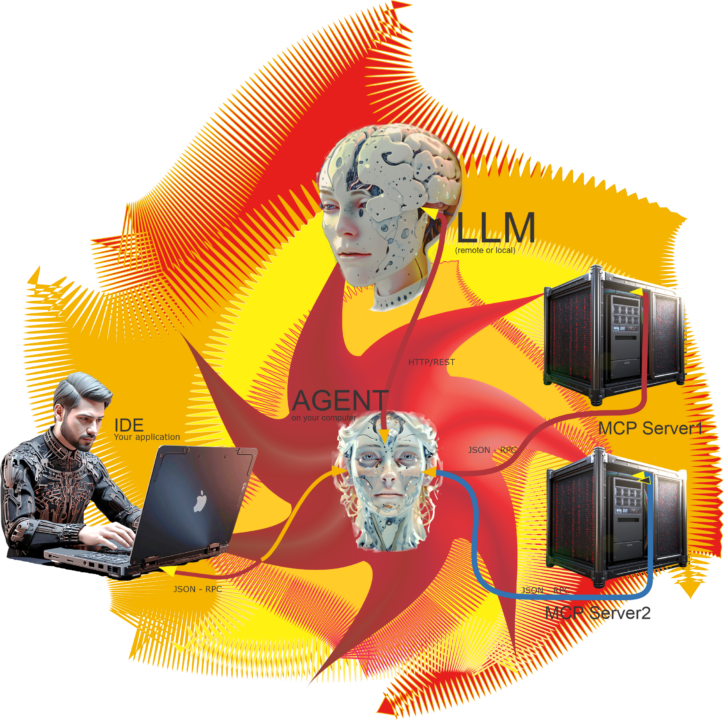
The Agent Client Protocol (ACP) standardizes communication between code editors
(interactive programs for viewing and editing source code)
and coding agents (programs that use generative AI to autonomously modify code).
The BMad Method. BMad stands for Build More Architect Dreams.
In practice it’s a method for people who build software with the help of AI: instead of asking one generic assistant for everything, you organize work with clear agents and workflows, from the initial idea to the code.
PROGRAM: Friday 26th June 2026 All about LLM
09:30 – 10:00 Coffee – Welcome
10:05 Danny Wind Introduction to LLMs
Neurons, Vectors, Tokens, Training, and Weights
11:00 Danny Wind RAG
Retrieval Augmented Generation, adding static content to LLMs
11:30 – 11:45 Cofee
11.45 Michael van Canneyt Demo of RAG
12:30 Lunch
13:00 Danny Wind Agents (steering LLMs to do things)
13:30 Michael van Canneyt ACP – Agent Context Protocol.
Let your program control an agent.
Demo of ACP with code
14:00 – 14:15 Coffee and discussion
14.15 Danny Wind MCP (Model Context Protocol,
adding dynamic content and real-world actions to LLMs
15:00 Michael van Canneyt DEMO MCP
Demo of Michael’s MCP with code
16:00 – 16:15 Coffee and discussion
16:30 Michael van Canneyt demo using Claude Code (Lazarus)
+- 17.00 End session
PROGRAM: Saturday 27th June 2026 / hands-on BMad – all about Mimer
9:30 – 10:00 Coffee – Welcome at the second day.
10:00 Michael van Canneyt
Introduction and hands-on for the BMAD method.
11:00 – 11:15 Coffee and discussion
Continuation of the introduction and hands-on for the BMAD method.
12.30 Lunch
13.00 Kim Madsen – live session from Denmark,
Summary of LLMs, RAG, MCP, ACP, Thinking et al.
14.30 Kim Madsen The Mimer – live session from Denmark,
A Complete GUI Framework
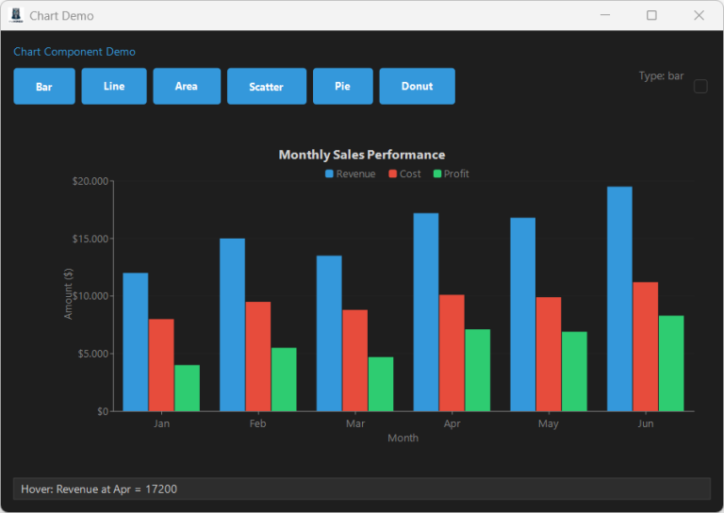
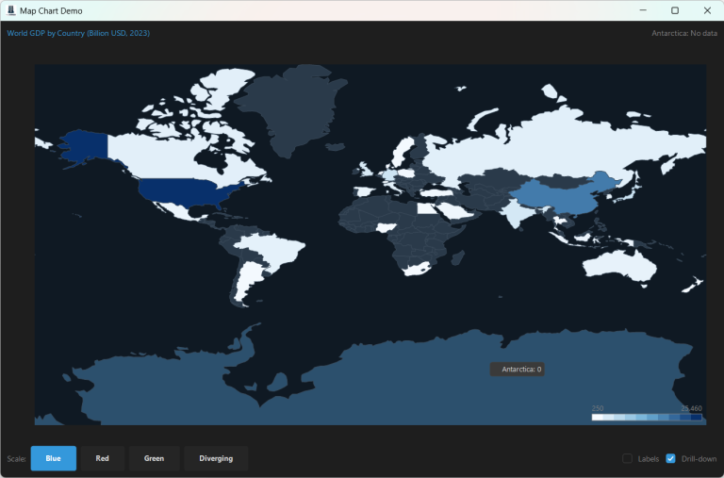
MIMERCode includes a full declarative GUI framework, rendered by its own canvas engine — every pixel is painted by MIMERCode, with no platform widget dependencies.
Over 30 built-in widgets are available:
text inputs, textareas with line numbers,
numeric editors with hex/binary support,
checkboxes, radio buttons, sliders, dropdown selects,
tab containers, splitters, menubars with keyboard shortcuts,
tree views, status bars, and more.
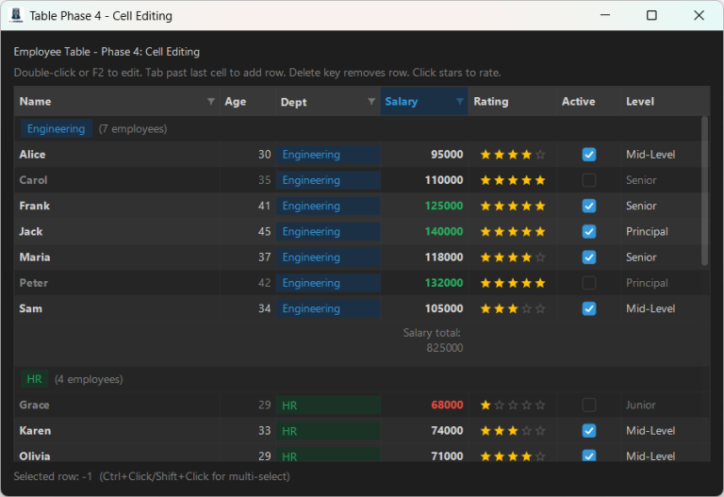
The table widget is a full data grid with sorting, column filtering, cell editing, grouping, custom cell templates, and keyboard navigation:
Animations That Just Work
Add a single transition property to any widget, and style changes animate smoothly:
button text: “Hover me”,
background: if IsHovered then “primary” else “surface” end,
transition: “button_hover”,
on_mouseenter: func() IsHovered := true end,
on_mouseleave: func() IsHovered := false end
end
Thirteen named transition presets are built in — from subtle "fade" and "focus" to playful "bounce" and "spring" with elastic overshoot. Twelve easing functions are available, including cubic, back, bounce, and elastic variants. All animations run at 60fps
Full SVG rendering with SMIL animations is also supported — including <animate>, <animateTransform>, and <animateMotion> for path-following animations. Build loading spinners, animated icons, and data visualizations directly in SVG.
For LLM System Builders
If you are building a system where an LLM generates code at runtime, MIMERCode was designed specifically for you. The combination of contracts, channels, and pipelines means you can execute LLM-generated code with confidence:
- Invalid data is rejected at entry — contracts validate before your code runs
- Secrets never leak — sensitive fields are sealed, even in error messages
- I/O is sandboxed — channels prevent unauthorized file, network, or database access
- Every step has error handling — pipelines provide per-step abort/skip/retry/fallback
- Execution is fully traceable — built-in logging with trace IDs and timing
An LLM that generates MIMERCode cannot import os; os.system("rm -rf /"). It cannot read /etc/passwd. It cannot send your data to an unauthorized endpoint. The language itself makes these things impossible.
15:30 – 16:00 Coffee and discussion
For Delphi Developers
MIMERCode will feel immediately familiar. It inherits Delphi’s class/record/interface model, constructor/destructor lifecycle, virtual/override dispatch, properties, and try/except/finally. What changed is the boilerplate: no begin/end pairs (just end), no semicolons, func instead of function/procedure, return instead of Result :=, and local variables declared anywhere instead of a var block at the top.
The runtime is built in Delphi, rendered via GDI+, and runs natively on Windows.
17:00 Finish
Extra info will follow soon…